
Basic Knots and Techniques
Rope is not only about holding. It is about communicating, about listening, about touching without hands.
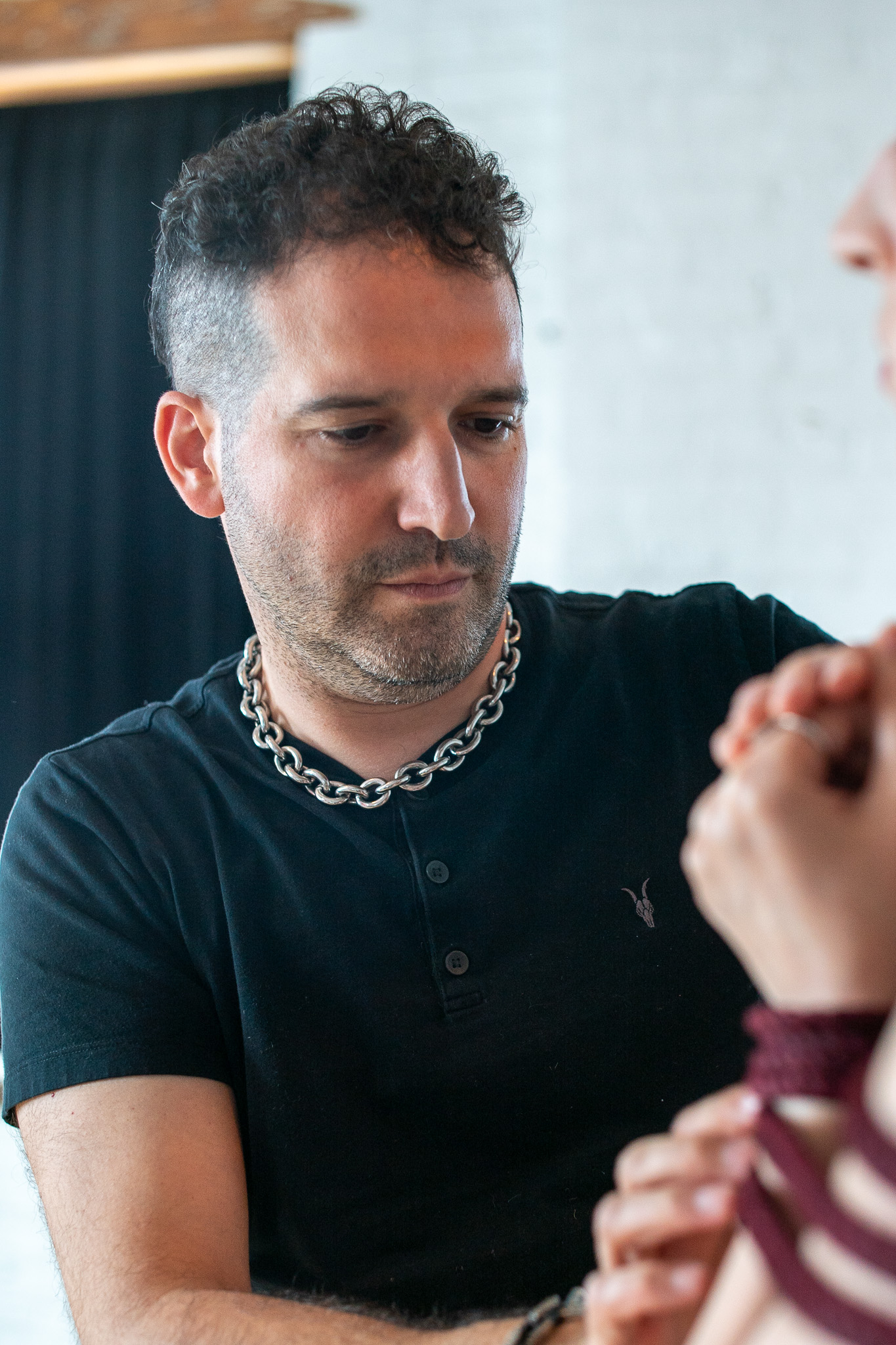
In Shibari, even the most basic knot is not just a technique — it is a moment of presence. A line of trust. A breath made visible.
This article is not a technical manual. It is an invitation to learn the foundational knots with intention, respect, and clarity — and to discover how each one opens a space of dialogue between bodies.
The Single Column Tie
The single column tie is the foundation of most Shibari patterns. It is a way of safely tying one wrist, one ankle, one limb — without cutting circulation, and with full control over tension and movement.
Technically, it teaches how to wrap evenly, how to lock a rope safely using a friction, and how to make your rope feel clean, respectful, and intentional. Symbolically, the single column is about touching one part of the body with presence. One wrist. One ankle. One yes. It says: I see you here. I'm with you here. And I will hold you carefully.
The Double Column Tie
Where the single column binds one, the double column ties two parts together: two wrists, two ankles, two poles, two truths.
Technically, it reinforces rope symmetry, proper spacing between limbs, and balanced tension that holds without injury. But more than that — the double column teaches how to bring together. Not to restrict, but to invite unity. It's a gesture of relationship. Two parts. One thread. A shared rhythm.
Frictions, Tensions, and Flow
Frictions are what make the rope hold. Without them, every wrap slips. With them, you create stability — without knots. Understanding frictions teaches you the language of movement and stillness. Where the rope slides, where it stops. Where it listens, where it ****** Frictions are the unsung poetry of Shibari. They make your rope quiet, respectful, invisible — like breath.
The Double Column Tie
You will learn how to use reverse tension, how to lock a wrap without hard knots, and how to move around the body without disrupting connection.
Safety Is Not Optional
You cannot practice Shibari without understanding the anatomy of trust. Never tie on nerves (radial nerve, upper arms, inner thighs). Always check for circulation (warm skin, movement, sensitivity). Never leave someone unattended in rope. Always be ready to cut the rope if needed. Safety is not there to limit your creativity. It is there to make the depth possible. Because only when we feel truly safe, can we truly surrender.
What You Really Learn
You don't just learn knots. You learn to slow down, to feel tension and release, to read breath and body, to listen without speaking, to create beauty with presence, to honour the body of another like a sacred altar. Even in the most basic rope work, there is ceremony.
Starting Points
If you are new to rope, begin with: single column tie, double column tie, simple frictions, Lark's head, and half hitches. Practice not to impress — but to listen, to honour, to prepare your hands to hold someone the way they deserve to be held.
Practice As Ritual
Tie slowly. Touch with breath. Let the rope speak louder than your mind. You are not just practicing knots. You are learning to hold power with reverence, and to offer surrender as a gift — not a weakness. This is not performance. This is poetry in tension.
本文要点
- The Single Column Tie
- Frictions, Tensions, and Flow
- What You Really Learn