
What Is Shibari? Japanese Rope Bondage Explained for Beginners
What is shibari? It is Japanese-style rope bondage, the practice of tying a person with rope for restraint, sensation, shape or closeness. The ordinary version is smaller: two people on a living room floor, a bag of rope between them, and a conversation that came first. The word is the everyday Japanese noun for tying or binding. Much of it happens on the floor, much of it is not sexual, and none of it requires pain. A beginner can start with a bag of cotton rope and a pair of safety shears, and neither costs much.
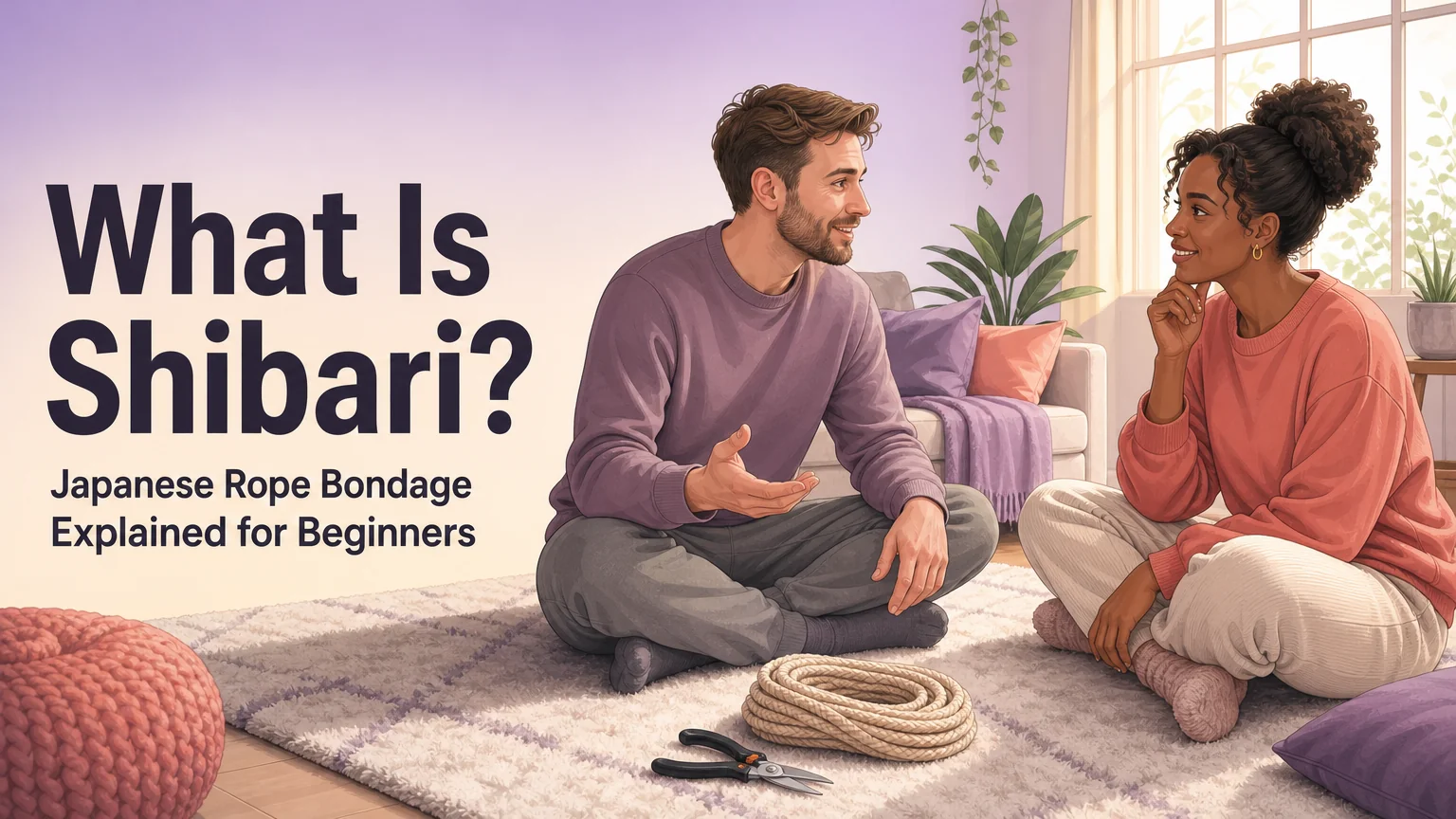
Start with a definition you can repeat. Shibari is Japanese-style rope bondage: binding a person with rope, usually for restraint, sensation, aesthetics or intimacy. Neither sex nor pain is required. Rope bondage is the umbrella term for bondage that uses only rope. Japanese rope bondage is the Japanese-style branch, and shibari and kinbaku are the two Japanese words most often used for it. Shibari is the ordinary noun for tying. Kinbaku means tight binding, and kinbaku-bi means the beauty of tight binding. Shibari became the popular English term in the 1990s. Midori, author of The Seductive Art of Japanese Bondage, treats the words as interchangeable and says kinbaku basically means really tight bondage.
Why People Try Shibari (and Why It Isn't Always Sexual)
Picture a 20-minute floor tie on a Tuesday night, fully clothed, ending with tea and a check-in. Trust and closeness come first. Rope demands close contact, skin sensation and constant communication, and for many people that is the whole appeal. Sensation is its own reason. Firm, even compression can feel like being held; people reach for the weighted blanket comparison. Absorption is another. The person tying is fixed on the knot; the person in the rope on sensation. Both are unusually present, closer to meditation than performance. Aesthetics count. Patterns, photography, performance and the look of a body in rope are reasons in themselves. Power exchange is the fifth. Some people use rope to play with control. Others want service, a game, or nothing resembling a power dynamic at all. Shibari does not have to include penetration or oral sex. A scene can be about restraint, shape, sensation or company. Pain deserves its own correction. It can be an element, but it should not feel like torture or something to suffer through. The person in the rope sets the level. If the version you want looks nothing like the loudest one you have seen, that is not a watered-down version. The range is the point.
Shibari Roles: Rigger, Rope Bottom, and Who It's For
The rigger, or rope top, handles the rope. In Japanese, nawashi literally means rope maker, and in rope practice it names a specialist performer; kinbakushi means a kinbaku master, often shortened to bakushi. The rope bottom is the person in the rope. A switch does both. Those words describe who handles rope, not who holds power. Some scenes are Dominant and submissive, and plenty are not: service, a trust exercise, two people making something beautiful, or two switches taking turns. Bunny is the common word for a bottom and carries gendered assumptions; rope bottom is the neutral term, and any gender can top, bottom or switch. Who this is for is wider than the photograph: same-sex couples, trans and non-binary readers, larger bodies, disabled people, and people with chronic pain who adapt ties rather than simplify them. Modifications are the practice, not a failure. Solo counts too. Self-tying is a practice, a way to learn and to wake up the skin. No partner is required.
Shibari Safety: Consent, Nerve Damage, and the Floor Rule
Nerve compression, not blood flow, is the catastrophic risk, and color checks will not catch it. Five structures to know. The radial nerve runs along the outer and back side of the upper arm near the bone; compression numbs the back of the forearm and hand and weakens wrist and finger extension, known as wrist drop. The ulnar nerve is vulnerable at the inner elbow; tingling or numbness in the little finger and half the ring finger points to it. The median nerve can be compressed near the wrist or palm, changing sensation in the thumb, index and middle fingers. The common peroneal nerve wraps around the outside of the knee, where compression can cause foot drop and numbness on top of the foot, so hip harnesses and futomomos need care. The brachial plexus crosses the shoulder and armpit and needs wide, even bands. Warning lights, not sensations to push through: tingling, numbness, patches of dead skin; electric shock or burning; trouble extending the wrist or fingers, or lifting the toes; weak grip. Compression can be painless, so the movement check matters more than the pain report. Damage can happen in seconds or build over many sessions. Recovery can take weeks, months, or never be complete; case reports describe severe radial nerve injury after 25 minutes of suspension.
Keep wraps wide, even and on meatier areas. Avoid narrow, high-tension bands around the mid-upper arm, knots in the inner elbow crease, direct pressure on the spine, and joints under compression. If symptoms appear, say so, slacken the rope, and seek medical advice if they persist or weakness appears. Mild irritation means stopping and resting the limb. Safety shears stay within reach whenever rope is on skin; in an emergency you cut rather than untie. Never rope the neck.
Shibari Roles: Rigger, Rope Bottom, and Who It's For
In shibari, floor ties come first. Suspension adds falls, hardpoint failure and rigger error on top of nerve risk, and you learn it in person, not from video. Never leave someone alone in bondage. Never self-suspend without a spotter and rated equipment. Safety is what makes the play possible. It is not the tax on it.
What Rope to Buy for Shibari: Jute, Hemp, or Cotton?
For a first shibari floor tie, cotton is the forgiving choice, and no one needs hemp or jute to begin. Cotton is soft, holds knots, washes, costs little and rarely triggers allergies. The catch: cotton is elastic, so a knot left on a body keeps tightening, and it is not for suspension. Jute gives the traditional look and grips through friction, but it is coarser, has lower tensile strength, comes from a grass-family fiber that can trigger allergies. Hemp is traditional, strong and durable, and shares the coarseness, price and allergy caveats. Nylon and polyester are cheap, colorful and washable. Knots do not hold in them, which makes them easy to untie, wrong for suspension, and prone to friction burn. The buying list: a handful of 6 mm lengths in the 7 to 8 meter range, plus safety shears, the one purchase that is not optional. ****** for fraying and stiffness, wash what can be washed, retire anything fuzzy.
How to Learn Shibari: Your First Class and First Year
You can learn a single-column tie and a double-column tie from video. Practice on your own ankles, then on a pillow, before you put rope on a person. What video cannot do is see your tension or placement. Learn suspension in person. What goes wrong is rarely the knot. It is the judgment. A good first shibari class is a conversation before it is a tie: experience, expectations and limits first, then guided practice with individual feedback, then a review. Ask before you book: do you teach nerve anatomy and circulation checks? What comes before suspension? How are consent and limits handled? The progression is unglamorous. Single column, double column, a simple harness, floor ties, tying to furniture, then a class, and suspension only with rated equipment, a spotter and in-person ****** A realistic first month: two ties learned well, one class attended, no suspension, and a body that knows more about itself than it did.
Shibari Aftercare and Rope Drop: What to Expect
Start at the moment the rope comes off. Untie slowly and check circulation and sensation as you go. Warm up, drink water, eat something, get a blanket. Decide before the scene who needs quiet and who needs company. Shibari can leave you calm, connected and sometimes high. When the feel-good hormones wear off, a comedown can follow. Rope drop is common, can arrive after the scene or the next day, and is chemistry rather than a verdict on what just happened. Both people can get it. What helps: planned aftercare, a next-day check-in, food, sleep, company, and naming it out loud ****** of treating it as evidence that something went wrong. Underneath the physical risk sits an emotional one. Rope can surface memories, fears and associations nobody planned for. Stopping a scene for emotional reasons is a complete reason to stop. Persistent low mood or anxiety deserves support, not self-blame.