
Acute Radial Compressive Neuropathy: The Most Common Injury Induced by Japanese Rope Bondage
Abstract
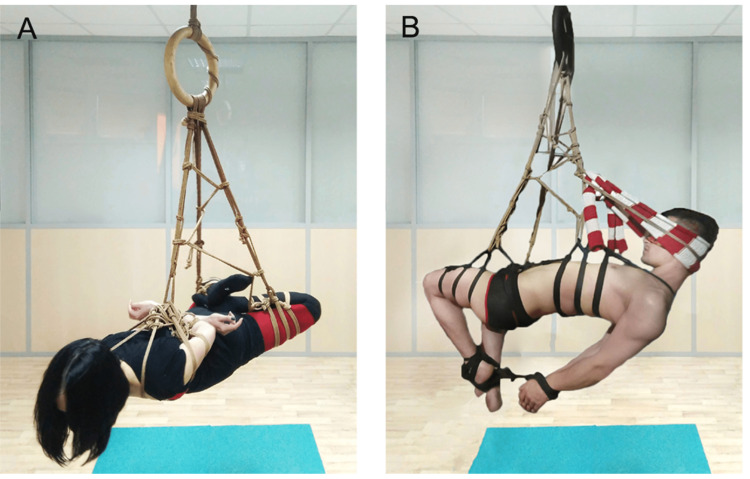
Japanese rope bondage (RB), or Shibari, is an art form involving the voluntary and aesthetic binding of a person with a rope, which may result in compression injuries to peripheral nerves. To investigate the nature and extent of nerve injuries associated with this practice, we conducted a survey of four experienced RB practitioners (riggers) and participants who were willing to share their experiences of injury. Injuries presented acutely and immediately following full-body suspensions, with a total of 10 individuals (16 injuries) identified with damage to the radial, axillary, or femoral nerves. Notably, the radial nerve was the most commonly affected structure in our patient cohort, with 90.0% of individuals experiencing an injury at this level.
We present a rare case of acute repeated compression of the radial nerve during full-body suspension RB. A 29-year-old female was suspended for 25 minutes using a 6-mm jute rope, resulting in wrist and finger drop, as well as reduced sensation in the left hand. Analysis revealed a 77.3% conduction block in the upper arm segment. Improvement was observed after three months, fully achieved after five months. Seventeen months later, re-compression of both radial nerves occurred during a similar suspension lasting 8-10 minutes. The third compression episode occurred three years later, lasting five minutes, with full recovery within two minutes. Because the radial nerve is the most frequently injured structure, the findings underscore the significance of recognizing the anatomical course of the radial nerve, particularly its position posteriorly at the distal deltoid tuberosity level, as a means of preventing nerve injury in this region.
Introduction
Rope bondage (RB), also known as Shibari, is a practice that has evolved over centuries in Japan. It involves one partner restricting the physical mobility and/or freedom of action of another partner to varying degrees for psychosexual and/or aesthetic gratification. Despite its growing popularity in recent years, RB rema****** due to negative connotations. Motives and emotions surrounding RB vary widely among participants, from exploring bodily sensations to mastering tying techniques and appreciating the aesthetic aspects of the practice. However, RB carries potential hazards, including peripheral nerve damage resulting in motor and sensory impairments and, in severe cases, fatalities. Inversions during full-body suspension increase the risk of falls, head injuries, and asphyxiation. Despite warnings about peripheral nerve damage, scientific literature lacks sufficient information on the prevalence and specifics of nerve injuries caused by RB.
RB involves half-suspension and full-suspension, with the latter posing a higher risk for compression injuries to peripheral nerves. This article aims to address this gap by providing a detailed report of nerve injuries in RB, with a focus on identifying the nerves most vulnerable to acute compression neuropathy.
Materials and methods
Materials and methods
To address the dearth of knowledge on nerve injuries related to RB, we conducted a retrospective survey among four experienced RB practitioners and participants who shared their experiences with injuries. Participants were recruited through on****** and social media platforms for RB enthusiasts, as well as through personal networks. Through semi-structured interviews we sought to gain ****** into their experience with RB, their understanding of nerve anatomy and injury, the types of binding techniques they use, and the precautions they take to prevent nerve injuries. All four practitioners had three to five years of binding practice and handled approximately 100 binding cases per year. We identified 10 individuals (16 injuries) who suffered peripheral nerve damage leading to motor impairment after RB suspension. The study has several limitations, including the small sample size and the potential for selection bias; the retrospective nature also makes it susceptible to recall bias.
Results
With the exception of a singular case, all nerve injuries transpired acutely and promptly following full-body suspension. Some participants encountered fleeting paresthesia and numbness in their hands and fingers when the rope was positioned or shifted around the wrist area. Among the affected individuals, five sought medical attention. Our analysis demonstrated that the radial nerve at the upper arm was the most commonly affected structure in our patient cohort, with 90.0% of patients and 81.3% of injuries involving this nerve. Typically the rope was situated in the middle third of the upper arm to facilitate a horizontal or lateral suspension. Affected individuals frequently reported numbness of the dorsal surface of the wrist and varying degrees of weakness in wrist and finger extensor muscles, ranging from complete paralysis to moderate weakness. Sensory loss was observed on the lateral dorsum of the hand. In one ****** an isolated compression injury of the axillary nerve arose due to suspension from the torso; after 30 minutes the participant could not abduct the right arm. The findings indicate that recognizing the anatomical course of the radial nerve is crucial for preventing injury in this region.
本文要点
- Introduction
- Materials and methods